Consumers today increasingly demand efficient and effective mobile and online apps to make their lives easier. And yet, financial service organizations often fail to deliver. In this eBook, you'll learn how app performance can make or break customer loyalty in the financial services sector—and why application performance monitoring (APM) is the key to an optimal user experience. You'll gain insights into: The fintech effect and the digital disruption of financial services How app performance impacts customer loyalty and trust Why banking and insurance institutions need APM Download the eBook today and discover how you can provide flawless online and mobile experiences!
Performance testing has always been about ensuring the scalability of a software application. Until the arrival of the first performance test automation solutions in the late 90's, performance testing was a manual process that was difficult, if not impossible, to test in a consistent and reliable fashion. The arrival of these new toolsets suddenly allowed software testers to turn discrete user actions into scripts that could be combined and replayed as test scenarios. This eBook discusses the history of application performance testing, and with that backdrop, offers advice on combining performance testing and Application Performance Monitoring (APM) in AWS.
This is a summary of some of the most important questions concerning the Spring Framework, that you may be asked to answer in an interview or in an interview test procedure! There is no need to worry for your next interview test, because Java Code Geeks are here for you! The majority of the things you may be asked is collected in the list below. All core modules, from basic Spring functionality such as Spring Beans, up to Spring MVC framework are presented and described in short. After checking the interview questions, check our Tutorials.
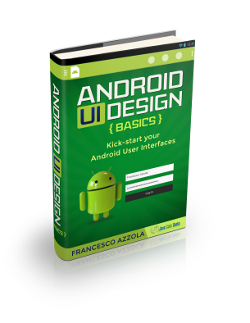
Android is an operating system based on the Linux kernel and designed primarily for touchscreen mobile devices such as smartphones and tablet computers. Android OS has taken over the world of mobile devices and is growing rapidly the last few years. Android's user interface is based on direct manipulation, using touch inputs that loosely correspond to real-world actions, like swiping, tapping, pinching and reverse pinching to manipulate on-screen objects. The response to user input is designed to be immediate and provides a fluid touch interface.
Your Suggestions Any ideas or suggestions? Shoot us an email at newsletter@javacodegeeks.com




No comments:
Post a Comment